2026 Conference Objects
Empowering the Shadows: A Community-Based Mental Health Intervention Among Undocumented Youth in NYC
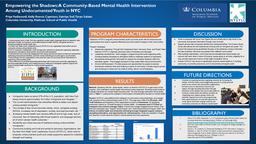
Background: Undocumented youth face a unique constellation of stressors—fear of deportation, financial instability, and systemic exclusion—that serve as significant social determinants of health (SDOH). These factors lead to disproportionately high rates of anxiety and depression while simultaneously creating barriers to traditional healthcare access. This case study examines the New York State Youth Leadership Council (NYSYLC), a queer, POC, and woman-led organization, as a model for health communication and community-based intervention.
Methods & Intervention: As an organization led by individuals with lived undocumented experience, NYSYLC utilizes culturally responsive storytelling and peer-led advocacy to foster trust. Key interventions include: 1)Targeted Support Groups: Establishing virtual mental health spaces and the "Undocu Academy" for high school seniors (ages 16–30) to navigate life transitions 2)Political Education: Utilizing an intersectional framework to empower youth through "Know Your Rights" (KYR) campaigns and leadership development. 3) Resource Navigation: Bridging the gap to structural needs such as housing, legal clinics (ITIN/LLC building), and inclusive language materials. 4) Outreach Strategy: Leveraging "word of mouth" through trusted community pillars—teachers and professors—to refer students to a safe, hybrid (virtual/in-person) environment.
Results: By centering the "undocumented experience" in its leadership, NYSYLC bypasses the mistrust often associated with state-run institutions. The intervention demonstrates that mental health outcomes improve when clinical support is integrated with community organizing. This approach addresses the "whole person" by linking emotional well-being to tangible legal and economic protections.
Conclusion: To achieve health equity for undocumented populations, interventions must move beyond the clinic. The NYSYLC model suggests that trusted community hubs are essential for bridging the mental health gap. By fostering a sense of belonging and providing tools for self-advocacy, these organizations transform "vulnerable populations" into empowered leaders, ultimately mitigating the toxic stress associated with undocumented status.
Keywords: Health Communications, Immigrant Health, Public Health, Social media, Advocacy
Geographic Areas
Subjects
Files
-
 PV_Healthy Equity Poster.pdf
application/pdf
105 KB
Download File
Also Published In
More About This Work
- Academic Units
- Mailman School of Public Health
- Published Here
- September 16, 2026
